

- English
 Español
 Português
 русский
 Français
 日本語
日本語 Deutsch
 tiếng Việt
 Italiano
 Nederlands
 ภาษาไทย
 Polski
 한국어
한국어 Svenska
 magyar
 Malay
Malay বাংলা ভাষার
 Dansk
Dansk Suomi
Suomi हिन्दी
 Pilipino
 Türkçe
 Gaeilge
 العربية
 Indonesia
 Norsk
Norsk تمل
تمل český
český ελληνικά
 український
 Javanese
 فارسی
فارسی தமிழ்
தமிழ் తెలుగు
 नेपाली
 Burmese
 български
 ລາວ
ລາວ Latine
 Қазақша
 Euskal
 Azərbaycan
 Slovenský jazyk
 Македонски
 Lietuvos
 Eesti Keel
 Română
 Slovenski
 मराठी
मराठी Srpski језик

Why Do Motorcycle Street Tyres Need To Be Warmed Up Before Aggressive Riding?
SHANDONG RICHTONE INDUSTRIAL CO.,LTD, has long been associated with the evolution of Motorcycle Street Tyre development and its real-world performance behavior under different riding conditions. The question of why the Motorcycle Street Tyre needs to be warmed up before aggressive riding is not only a matter of riding habit, but also closely related to rubber chemistry, road interaction, and safety dynamics that many riders experience but rarely analyze in depth. Understanding this process helps explain why grip levels change within just a few minutes of riding and why early-phase control often feels noticeably different from fully warmed operation.
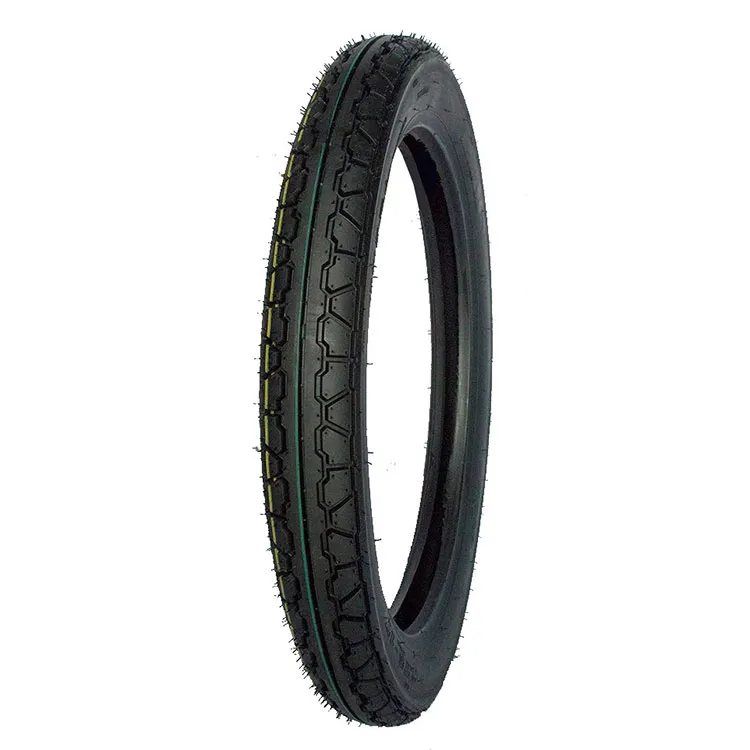
The Physics Behind Tire Warm-Up
A Motorcycle Street Tyre works through friction between rubber compounds and road surfaces. When the tyre is cold, the polymer chains in the rubber are relatively stiff and less flexible. As the tyre begins to roll, internal heat builds up through deformation and friction, gradually increasing elasticity.
This transition is not instant. It is a controlled physical response where temperature influences grip strength, contact patch behavior, and deformation speed. Even ambient temperature and road texture can affect how quickly this warming phase stabilizes.
In simple terms, a tyre is not "fully active" the moment motion begins. It needs a short stabilization period where heat distribution becomes more uniform across the tread surface.
What Happens When it Is Cold
Before reaching its optimal working temperature, it behaves differently in several noticeable ways. These changes are not failures but natural characteristics of rubber materials responding to external conditions.
1. Reduced Surface Adhesion
Cold rubber has lower tackiness, meaning it does not conform as easily to micro-textures on asphalt.
2. Slower Deformation Response
The tread blocks take slightly longer to adapt to road irregularities, which can affect corner entry feel.
3. Uneven Heat Distribution
Initial rolling creates localized heating patterns rather than a uniform temperature field.
4. Temporary Stability Variations
During early riding minutes, feedback from the tyre may feel inconsistent until thermal balance is achieved.
Comparison Table: Cold vs Warmed Motorcycle Street Tyre Behavior
| Condition | Rubber Flexibility | Grip Level | Feedback Consistency | Heat Distribution |
| Cold Start | Low | Moderate to Low | Inconsistent | Uneven |
| Partially Warmed | Medium | Improving | Becoming stable | Semi-uniform |
| Fully Warmed | High (optimal elasticity) | Stable and strong | Predictable | Uniform |
This gradual transformation explains why experienced riders often notice a clear difference between initial movement and sustained riding performance.
Riding Scenarios and Real-World Behavior
Different riding environments influence how quickly it reaches its functional temperature range.
Urban commuting with frequent stops creates intermittent cooling cycles, meaning the tyre may rarely stay in a fully stabilized state for long periods. In contrast, continuous riding on open roads allows more consistent heat buildup, leading to a more stable grip condition.
Road surface also plays a significant role. Rough asphalt tends to generate heat faster due to higher friction interaction, while smooth surfaces may delay the warming process slightly.
Weather conditions add another layer of variation. Cold mornings naturally extend the stabilization period, while hot climates shorten it significantly.
Material and Compound Behavior in Modern Tyres
Modern Street Tyre designs often use multi-compound structures to balance durability and grip across temperature ranges. These compounds are engineered to respond progressively rather than abruptly.
Rubber polymers contain additives that adjust flexibility as temperature rises. Fillers such as silica or carbon black influence how heat is absorbed and retained within the tread.
This material behavior is the reason tyres do not suddenly "switch" performance states but instead transition smoothly through multiple phases of grip development.
Common Misunderstandings Among Riders
There are several misconceptions about tyre warm-up behavior that persist in everyday discussions:
- Some assume grip is identical from the first meter of movement, which ignores thermal dependency.
- Others believe only high-speed riding generates heat, while low-speed flexing also contributes significantly.
- A frequent misunderstanding is that warm-up is only relevant for track environments, although street conditions also involve continuous micro-heating cycles.
In reality, every Motorcycle Street Tyre undergoes this process regardless of riding style. The difference lies only in speed and intensity of temperature buildup.
Practical Warm-Up Techniques in Everyday Riding Contexts
Without turning the process into a rigid routine, riders often naturally assist tyre stabilization through smooth initial movement patterns.
Gentle acceleration, gradual corner entry, and avoiding abrupt directional changes in the early phase allow the rubber to reach its optimal state more evenly. These behaviors help the tread distribute heat consistently across the contact surface.
It is also observed that consistent riding rhythm contributes more effectively to stabilization than short bursts of aggressive input followed by long pauses.
Environmental Influence on Warm-Up Efficiency
External conditions significantly shape how the Street Tyre responds during early operation:
- Cold air slows heat retention within rubber compounds
- Wet surfaces modify friction generation patterns
- Dust or debris can temporarily reduce surface contact efficiency
- Wind exposure may cool tread surfaces faster than internal heating can compensate
These variables explain why identical tyres may feel different on different days even under similar riding speed.
Engineering Perspective on Street Tyre Design
From a design standpoint, 他和 Street Tyre is not built for a single fixed condition but for a wide operational range. Engineers focus on ensuring predictable transition behavior rather than maximum performance at a single temperature point.
This means the warm-up phase is not a limitation but a designed characteristic. It ensures the tyre remains functional across varying climates, road types, and riding durations.
Why Warm-Up Behavior Matters in Real Usage
The importance of warm-up lies in consistency. A tyre that behaves predictably across temperature changes offers more stable feedback, which allows riders to better interpret road conditions.
Instead of treating warm-up as a separate phase, it is more accurate to view it as part of continuous performance evolution during riding.
Conclusion
The warming behavior of a Motorcycle Street Tyre reflects a combination of material science, environmental interaction, and mechanical deformation processes that define how grip develops over time. Observations across different conditions show that stability is not immediate but gradually achieved as temperature and friction reach balance.
SHANDONG RICHTONE INDUSTRIAL CO.,LTD continues to apply structured production processes and testing systems to support consistent performance characteristics in its Street Tyre range, including the RICHTONE® Street Tyre product series.
Send Inquiry





X
We use cookies to offer you a better browsing experience, analyze site traffic and personalize content. By using this site, you agree to our use of cookies.
Privacy Policy